WATER DAMAGE GUIDE • ELYRIA, OHIO
Ice Dams in Northeast Ohio: Causes & Prevention
Ice dams are a winter fact of life near Lake Erie. They look like icicles from the street, but the real damage happens inside: wet insulation, stained ceilings and water running down walls. Here is how ice dam prevention in Ohio works.
Why Are Ice Dams So Common Near Lake Erie?
Lake-effect snow piles heavy snow on roofs, and freeze-thaw cycles melt and refreeze it. Heat escaping from the house melts snow above the attic, and the water refreezes at the cold eaves.
Warning Signs
- Thick ridges of ice along the roof edge
- Large icicles hanging from gutters
- Water stains on ceilings along exterior walls
- Damp spots or frost in the attic near the eaves
- Water dripping around upstairs windows
Safe Removal Options
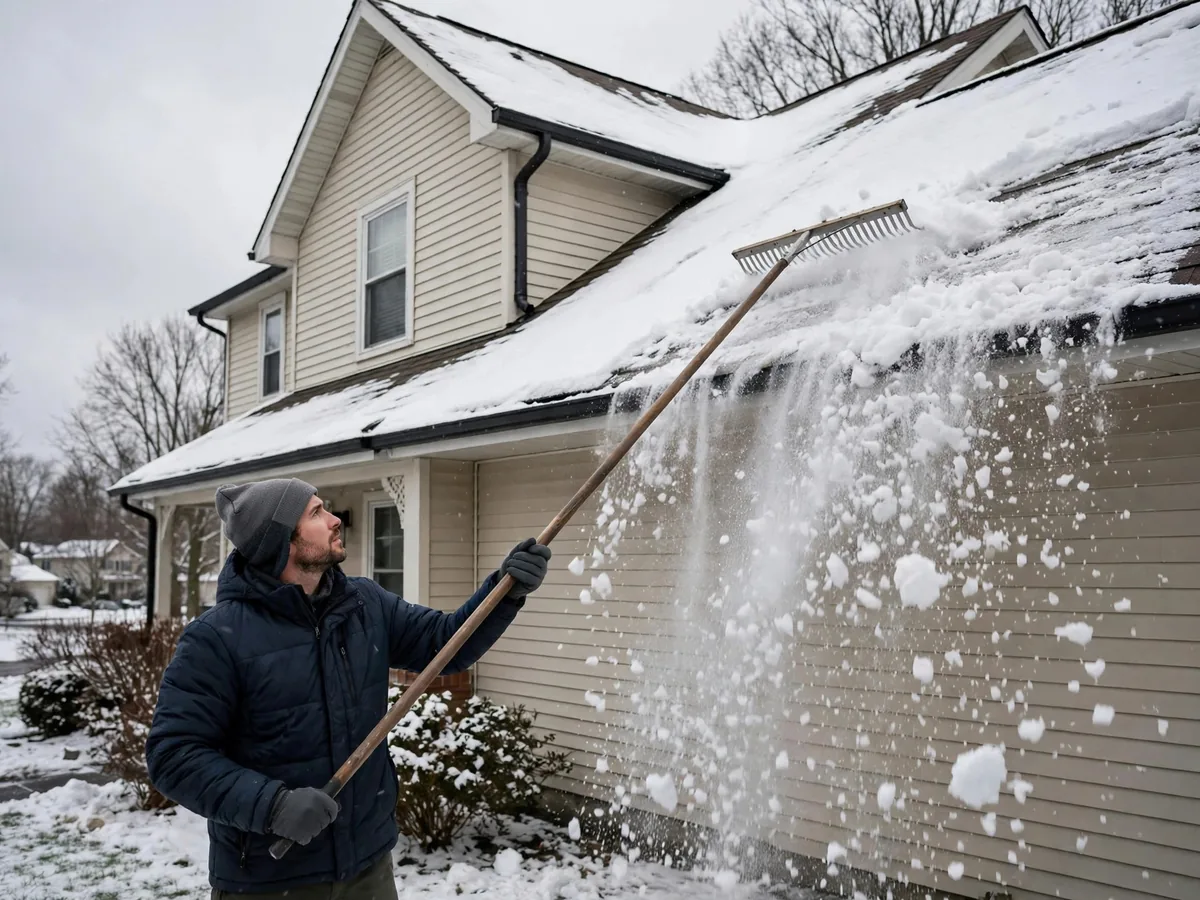
- Use a roof rake from the ground to clear snow from the lower few feet of roof
- Fill a stocking with calcium chloride and lay it across the ice dam to melt a channel
- Hire a roofer with steam equipment for large dams
- Never chip at ice with an axe or hammer, and never use rock salt on shingles
Long-Term Prevention
- Seal air leaks from the house into the attic: light fixtures, attic hatches and plumbing openings
- Add attic insulation to cut heat loss
- Improve ventilation with soffit and ridge vents
- Vent bathroom fans outside, not into the attic
- Ask a roofer about an ice and water shield membrane at the eaves when reroofing
A cold roof is the goal: if the roof deck stays close to outdoor temperature, snow does not melt unevenly.
Water Inside? What To Do
Put buckets under drips, move belongings, turn off power to fixtures in wet ceilings and call for help. See ice dam water damage and ceiling water damage repair.
Ice Dams Northeast Ohio: Why Lake-Effect Snow Makes It Worse
Lake-effect snow falls in heavy bands, often dropping a lot of snow in a short time. Deep snow insulates the roof surface, so the attic's escaping heat melts snow from below even on cold days. Then the water reaches the colder eaves and freezes. Repeated storms followed by sunny days create the perfect cycle for ice dams in Elyria and nearby Lorain County towns.
How To Remove Ice Dam Safely From the Ground
- Use a long-handled roof rake to clear the lower 3 to 4 feet of roof
- Work from the ground, never from a ladder in icy conditions
- Avoid pulling down large chunks of ice over walkways
- Lay calcium chloride socks across the ice to create drainage channels
- Call a professional for steam removal on large dams
Steam removal melts ice without damaging shingles, which is why pros use it instead of picks or hammers.
Ice Dam Leaking Into House: Where To Look First
Check the attic near the eaves for wet insulation and frost, the ceilings along exterior walls on the top floor, and the tops of upstairs windows. In story-and-a-half homes, check knee walls and closets tucked under the roof. Water can also run down the inside of exterior walls to the floor below.
Ice Dams and Gutters
Gutters do not cause ice dams, but clogged gutters can make them worse by trapping water and ice at the edge. Heated gutter cables can help in some spots, though they do not fix the underlying heat loss. Cleaning gutters in the fall is a simple first step.
Attic Air Sealing: The Most Effective Fix
Most ice dams start with warm air leaking into the attic through gaps around light fixtures, plumbing stacks, chimneys, attic hatches and wall top plates. Sealing these leaks and then adding insulation keeps the roof deck cold. An energy auditor or insulation contractor can find and seal these leaks, which also lowers heating bills.
Ice Dam Leaking Into House: Damage That Shows Later
Some ice dam damage does not appear until spring. Wet insulation that stayed in the attic can grow mold. Water that ran inside walls may cause paint to peel or drywall to soften weeks later. If you had ice dams this winter, check the attic and upper rooms in early spring for stains, odors or soft spots.
Ice Dams and Older Elyria Homes
Many older Elyria homes were built before modern insulation and ventilation standards. Story-and-a-half homes have heated rooms tucked under the roof with little space for insulation. Bungalows often have attic hatches and light fixtures that leak warm air. These features make older homes more likely to form ice dams, which is why air sealing and insulation upgrades help so much.
Heated Cables: Do They Work?
Heated roof cables laid in a zigzag pattern along the eaves can melt channels for water to drain. They help in problem spots but do not stop the underlying heat loss. They also use electricity and need to be checked before each winter. Think of them as a targeted fix, not a whole-roof solution.
Insurance and Ice Dams
Many policies cover interior water damage caused by ice dams. Ice removal and roof repairs may be handled differently. Photograph ice on the roof and the damage inside before cleanup starts.
Ice Dam Prevention Checklist for Fall
- Clean gutters and downspouts
- Seal attic air leaks around lights, vents and the hatch
- Check attic insulation depth and add more if thin
- Make sure soffit vents are not blocked by insulation
- Buy a roof rake before the first big snow
Doing these tasks in fall prevents most ice dams in winter.
FAQs
How do I stop an ice dam?
Short term, clear snow with a roof rake and melt channels. Long term, seal attic air leaks and improve insulation and ventilation.
Are ice dams covered by insurance?
Interior water damage is often covered. Check your policy and photograph the damage.