MOLD INSPECTION • ELYRIA, OHIO
Mold Inspection & Testing in Elyria, OH
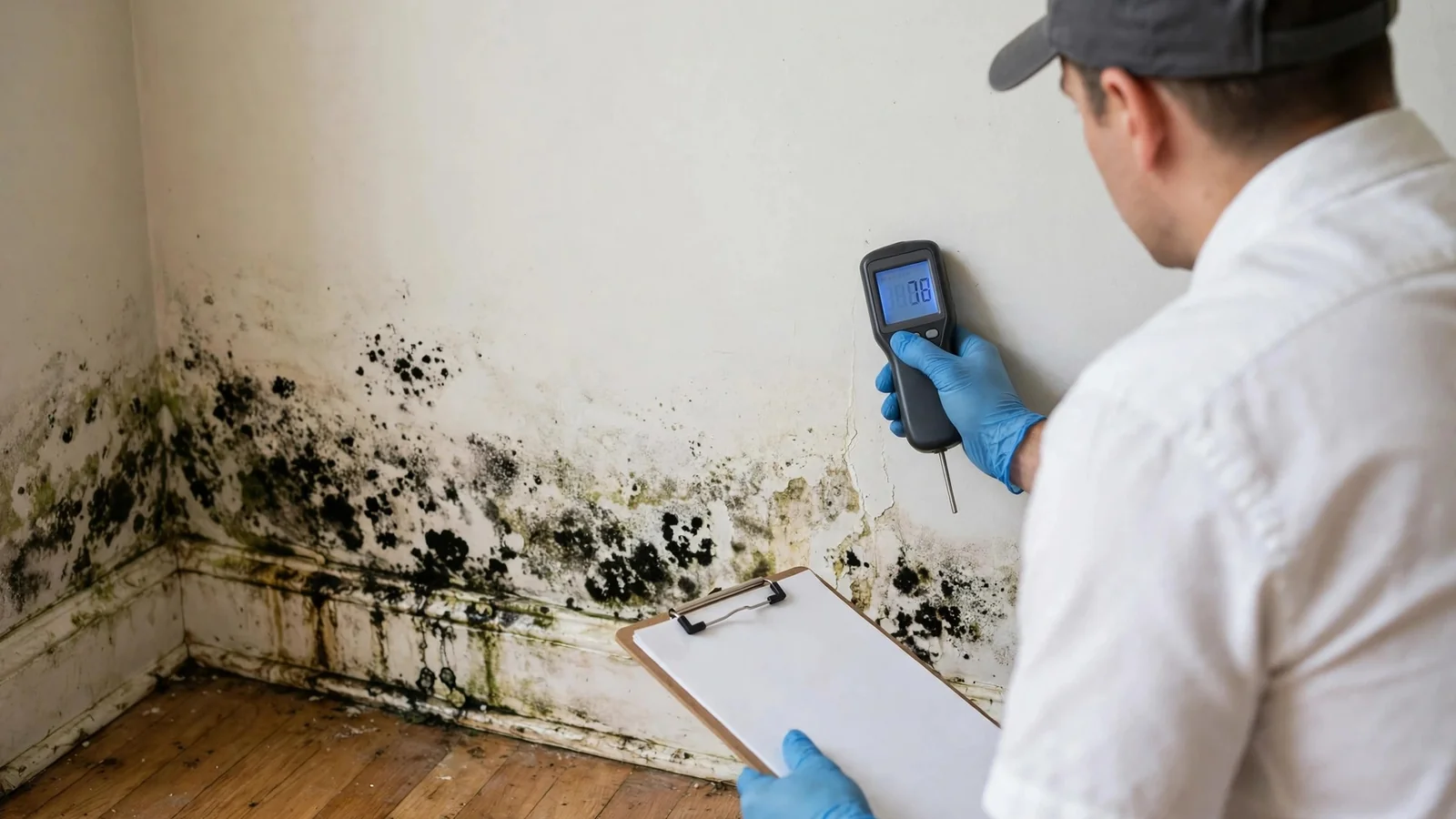
A musty smell, a stain that keeps coming back or an old leak you are not sure was dried properly are all reasons to look closer. Our mold inspection service in Elyria, OH uses moisture meters, thermal imaging and, when it helps, air sampling to find hidden mold and the water feeding it. You get clear answers and a plan, not guesswork.
What Does a Mold Inspection in Elyria Actually Check?
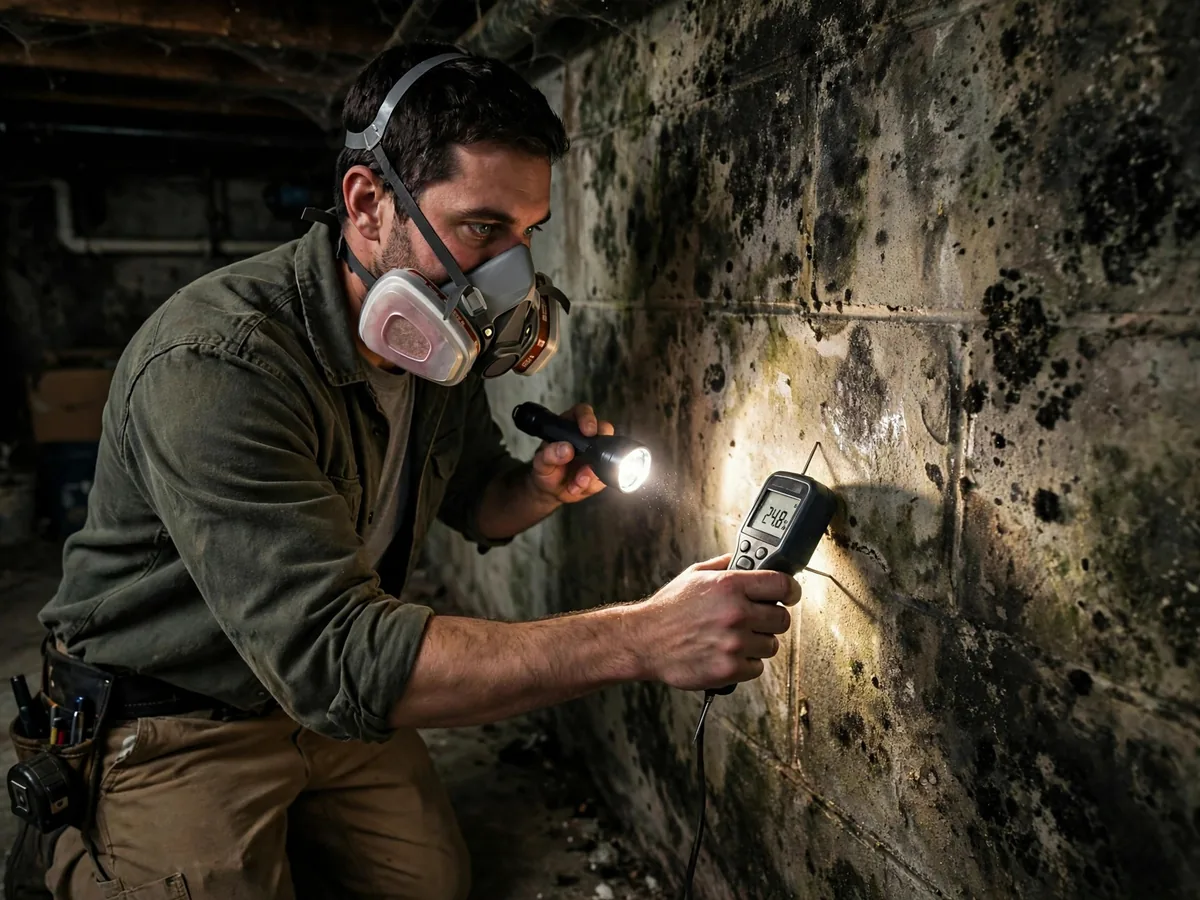
A mold inspection checks for visible growth, hidden moisture behind walls and floors, the source of that moisture and, when needed, airborne spore levels compared with outdoor air.
In Elyria homes the inspection usually starts in the basement, then moves to bathrooms, the kitchen sink wall, laundry area and attic. We look at the places mold likes to hide: behind finished basement walls, under carpet near the foundation, around window wells, inside vanity cabinets and on attic sheathing above bathrooms.
When Should You Get Mold Testing in Elyria, OH?
- Your basement smells musty, especially after rain or in summer
- You had a leak, flood or sewer backup that was dried with household fans
- You see spots or staining but are not sure if it is mold
- Someone in the home has allergy or breathing symptoms that ease when away
- You are buying or selling an older home and want to know what is behind the walls
- Mold remediation was done and you want to confirm the area is clear
Why Does My Basement Smell Musty?
That smell usually comes from microbial growth feeding on damp materials. Common causes in Elyria basements include high summer humidity, seepage through block walls, a slow plumbing leak, a wet carpet pad near the foundation or a sump pit without a lid. A musty smell in the basement is one of the most common reasons people call us, and in most cases there is a moisture source we can find and fix.
Air Samples vs Surface Samples
- Air sampling: measures spore levels indoors and compares them with outdoor air. Useful when mold is suspected but not visible.
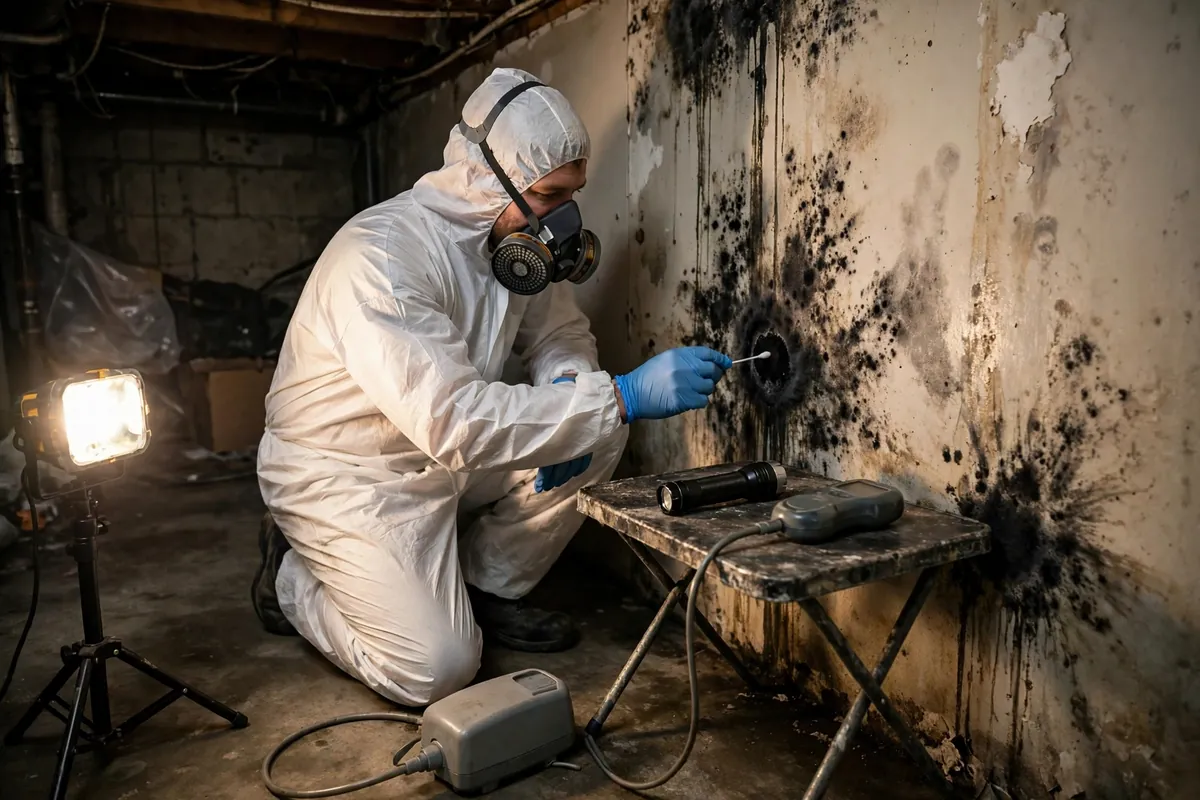
- Surface sampling: tape or swab samples of a visible spot to identify mold types.
- Moisture mapping: often the most useful tool, because mold only grows where there is moisture. Meters and thermal cameras show wet areas behind walls without opening them.
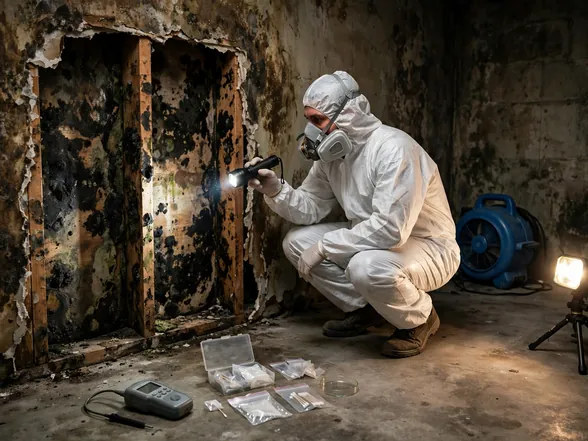
Not every home needs lab testing. If mold is clearly visible and the moisture source is obvious, testing may not change the plan. We will tell you honestly when testing adds value. For hidden mold detection, a borescope can look inside a wall through a small hole.
What You Get After the Inspection
- Where moisture and mold were found, with photos
- The likely source of the moisture
- Lab results if samples were taken
- A recommended plan: drying, cleaning, or full mold remediation
If remediation is needed, see our mold remediation page.
Mold Inspection Cost in Elyria
Typical ranges:
- Visual inspection with moisture mapping: about $150 to $400
- Inspection with air sampling (2 to 4 samples): about $300 to $700
- Post-remediation check with sampling: about $250 to $600
Lab fees and the size of the home affect the final price.
Mold Inspection for Buying an Older Elyria Home
Many homes in Elyria have finished basements, older plumbing and decades of seasons behind them. A standard home inspection may note a stain or a musty smell, but it usually does not include moisture mapping or sampling. A mold inspection before closing can show whether a basement has active moisture, hidden growth behind paneling or a past flood that was not fully dried. That information helps you negotiate repairs or price before you buy.
Mold Inspection After a Leak or Flood
If you had a burst pipe, flooded basement or sewer backup that was cleaned with household fans and a shop vac, hidden moisture may still be in walls and subfloors. An inspection a few weeks later can confirm the area is dry or find growth that needs removal. This is especially useful when you plan to finish or refinish the space.
Mold Testing in Elyria, OH: What Lab Results Mean
- Spore counts: the number of spores per cubic meter of air, compared with outdoor air.
- Mold types: some types point to long-term water problems, such as Stachybotrys or Chaetomium.
- Indoor vs outdoor ratio: indoor levels much higher than outdoor levels suggest an indoor source.
Results are one piece of the picture. Moisture readings and what we see on site matter just as much.
Signs of Hidden Mold Detection Problems
- Musty odor with no visible growth
- Allergy symptoms worse at home
- Peeling paint, warped baseboards or stains near floors
- Rooms that feel damp or stay cooler than others
If moisture is found, the next step may be structural drying or mold remediation .
Mold Inspection for Landlords and Property Managers
Between tenants, after a complaint or after a leak, an inspection gives you clear records of the unit's condition. See rental property water damage.
Mold Inspection Elyria, Ohio: Room by Room
Basement
We check exterior walls, the cove joint, behind paneling, under carpet near walls, around the sump pit and floor drain, and stored items against walls.
Bathrooms
We check around toilets, behind vanities, under tubs where accessible and the ceiling above showers.
Kitchen and laundry
We check under sinks, behind the dishwasher and fridge, and the wall and floor around the washer.
Attic
We check sheathing near bathroom fan outlets, along the eaves where ice dams form and around plumbing vents.
Crawl spaces
We check joists, sill plates, insulation and the vapor barrier.
Moisture Is the Real Target
Mold cannot grow without moisture. That is why every inspection focuses on finding wet materials and the source behind them. A wall that reads dry today but shows old staining tells a different story than a wall that is wet right now. Active moisture means active risk, and it needs to be fixed before any cleaning will last. If moisture is found, structural drying stops the problem at its source.
Mold Test Before Buying a House: What To Ask the Seller
- Has the basement ever taken on water?
- Has the sump pump or floor drain ever failed or backed up?
- Were there any burst pipes or roof leaks?
- Was any water damage professionally dried, and are there records?
- Has mold ever been removed from the home?
Answers plus an inspection give you a clearer picture before you commit.
Air Quality Testing for Mold: When It Adds Value
Air testing is most useful when mold is suspected but hidden, when someone in the home has health concerns, or when you want proof after remediation that levels are back to normal. When mold is clearly visible and the moisture source is obvious, testing may not change the plan, and we will say so.
Mold Inspection After Remediation
After mold is removed, a final check confirms the work area is clean and dry before walls are closed. This includes a visual inspection, moisture readings and, if requested, air samples compared with outdoor air. Passing this check gives you confidence before rebuilding and useful records if you sell the home later.
What a Mold Inspection Does Not Do
An inspection finds and documents moisture and mold, but it does not remove it. If growth is found, the next step is remediation, done with containment and HEPA filtration. Fixing the moisture source, such as a leak or seepage, is also part of the solution. See mold remediation .
Mold Inspection FAQs
Do I need a mold test before buying a house in Elyria?
It is a smart step for older homes with finished basements, past water damage or a musty smell. A home inspection may note visible issues, but a moisture-focused mold check goes deeper.
Can you find mold behind walls without tearing them open?
Often yes. Moisture meters, thermal imaging and a borescope through a small hole can show hidden mold and moisture.
How long does a mold inspection take?
Most homes take one to two hours. Lab results from samples usually come back in a few business days.
Is a mold inspection worth it if I can already see mold?
The visible spot is often only part of the problem. An inspection finds the moisture source and how far it spread, which keeps remediation from missing areas.
Book a Mold Inspection in Elyria
Get answers before a small problem grows. Call (440) 291-9431 for a mold inspection in Elyria, OH.