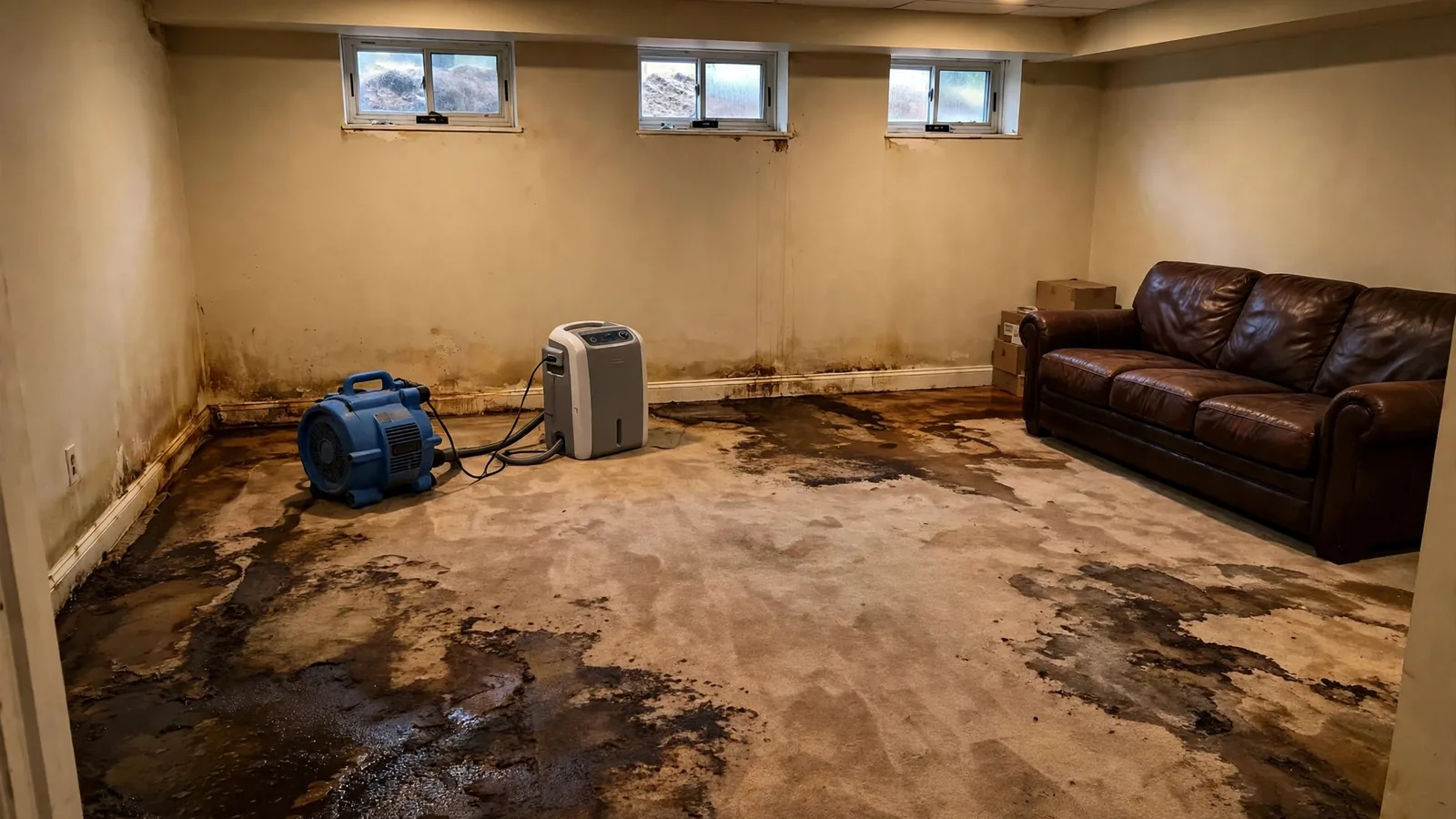
FINISHED BASEMENT WATER DAMAGE • ELYRIA, OHIO
Finished Basement Water Damage Restoration in Elyria, OH
A finished basement holds a lot more than concrete: drywall, insulation, carpet, LVP, furniture and often a bedroom or office. Our finished basement water damage crew in Elyria, OH removes the water, takes out only what has to go, dries the walls and framing and prepares the space for rebuild. A crew is dispatched immediately, 24/7.
How Much of a Flooded Finished Basement in Elyria Has to Come Out?
Usually the carpet pad, baseboards, wet insulation and drywall 2 to 4 feet above the water line. With sewage or storm water, all porous materials touched by water come out.
The deciding factors are the type of water, how high it rose and how long it sat. Clean water caught fast often allows drying behind the wall with small holes. Storm water from a floor drain or overflowing sump pit, which is common in Elyria, usually means a full flood cut.
Flood Cuts Explained
A flood cut is a straight cut along the drywall, usually 12 inches to 4 feet above the floor, depending on how high water wicked up. Removing the bottom section lets us:
- Remove wet insulation behind it
- Dry and clean the bottom plate and studs
- Check for mold inside the wall
- Make rebuild simple with a clean line for new drywall
Flooring in Finished Basements
- Carpet and pad: pad is replaced; carpet may be saved with clean water.
- Basement LVP water damage: planks are waterproof, but water trapped underneath must be dried, so planks are lifted.
- Laminate: swells and is replaced.
- Tile: usually stays; grout is cleaned and treated.
- Engineered wood: case by case.
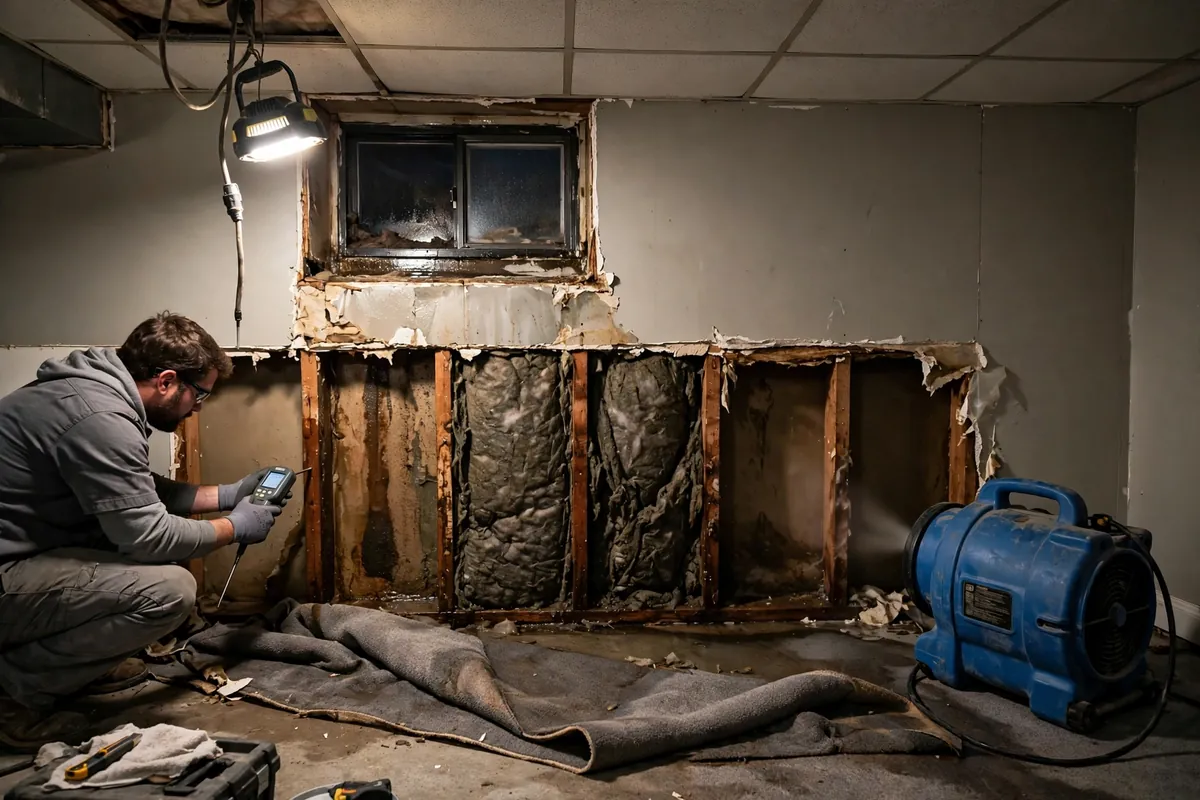
Basement Drywall Water Damage in Elyria: Drying Behind the Walls
Wet insulation and framing are hidden behind finished walls, which is why finished basements grow mold faster than open ones. After removal, we use air movers and dehumidifiers to dry studs, bottom plates and concrete, and record readings daily. Wet basement insulation, whether fiberglass batts or faced insulation, is removed and replaced after drying.
Finished Basement Water Damage Cost
- Clean water, drying with minimal tear-out: about $1,500 to $4,000
- Flood cut, insulation and flooring removal with drying: about $3,500 to $8,000
- Storm or sewage water in a large finished basement: about $6,000 to $15,000
Rebuild is separate. For unfinished basements, see flooded basement cleanup.
Why Finished Basements Get Hit Hardest in Elyria
Finishing a basement adds drywall, insulation, carpet and furniture right where water collects. In Elyria, where floor drain backups, sump failures and seepage are common, a finished basement can turn a simple pump-out into a major tear-out. Many finished basements were also built without vapor barriers or with fiberglass insulation against block walls, which traps moisture.
Finished Basement Flooded Elyria, OH: First Steps
- Turn off power to the basement if you can reach the panel safely
- Move electronics, furniture and boxes upstairs
- Photograph walls, floors and belongings
- Do not try to save soaked drywall or insulation with fans
- Call for extraction and drying the same day
Bedrooms, Offices and Bathrooms in the Basement
Many Elyria basements include a bedroom, home office, family room or bathroom. Each room is mapped for moisture separately. Bathrooms may have tile that can be dried, while bedrooms with carpet need pad removal. Closets and storage under stairs often hold hidden water. We check every room, including behind built-in shelving and under bars or cabinets.
Wet Basement Insulation: What Gets Replaced
- Fiberglass batts: removed when wet; they hold water and grow mold.
- Faced insulation with paper: removed when wet.
- Rigid foam board: often dried and kept if not contaminated.
- Spray foam: usually stays in place.
After drying, a better insulation choice can reduce the risk of mold next time.
Rebuild Better After a Flood
When rebuilding a finished basement, consider:
- Rigid foam insulation against concrete instead of fiberglass
- Moisture-resistant drywall or a small gap at the bottom of walls
- Waterproof LVP or tile instead of carpet
- A battery backup sump pump and backwater valve
- A dehumidifier set to keep humidity under 50 percent
These steps make the next event easier to recover from. See sump pump failure cleanup and basement floor drain backup.
Basement Drywall Water Damage Elyria: Mold Check
Before rebuilding, the framing and concrete are checked for mold and moisture. Building over wet or moldy framing traps the problem behind new walls. Clear readings and a visual check confirm the basement is ready. If mold is found, see mold remediation.
Common Causes of Finished Basement Floods in Elyria
- Floor drain backups during summer storms
- Sump pump failures during power outages
- Spring seepage through block walls behind finished drywall
- Water heater and washing machine failures in the utility room
- Burst pipes in exterior walls during cold snaps
- Bathroom leaks in basement bathrooms
Each cause leads to a different scope. Seepage may affect one wall slowly, while a drain backup can soak the entire floor in an hour.
Basement LVP Water Damage: Why It Still Needs Attention
Luxury vinyl plank is popular in finished basements because the planks resist water. The problem is underneath. Water flows between the click joints and spreads across the concrete under the planks, where it cannot evaporate. Left alone, it grows mold and odor under a floor that looks fine on top. Planks are lifted, the slab and any underlayment are dried and treated, and planks are reinstalled once dry.
Basement Carpet Flooded: Keep or Replace?
Basement carpet over concrete stays wet longer than carpet upstairs. With clean water and fast extraction, carpet may be dried and kept, with new pad. With storm water, sump water or sewage, carpet and pad are removed. Many homeowners choose LVP or tile when rebuilding to make the next event easier.
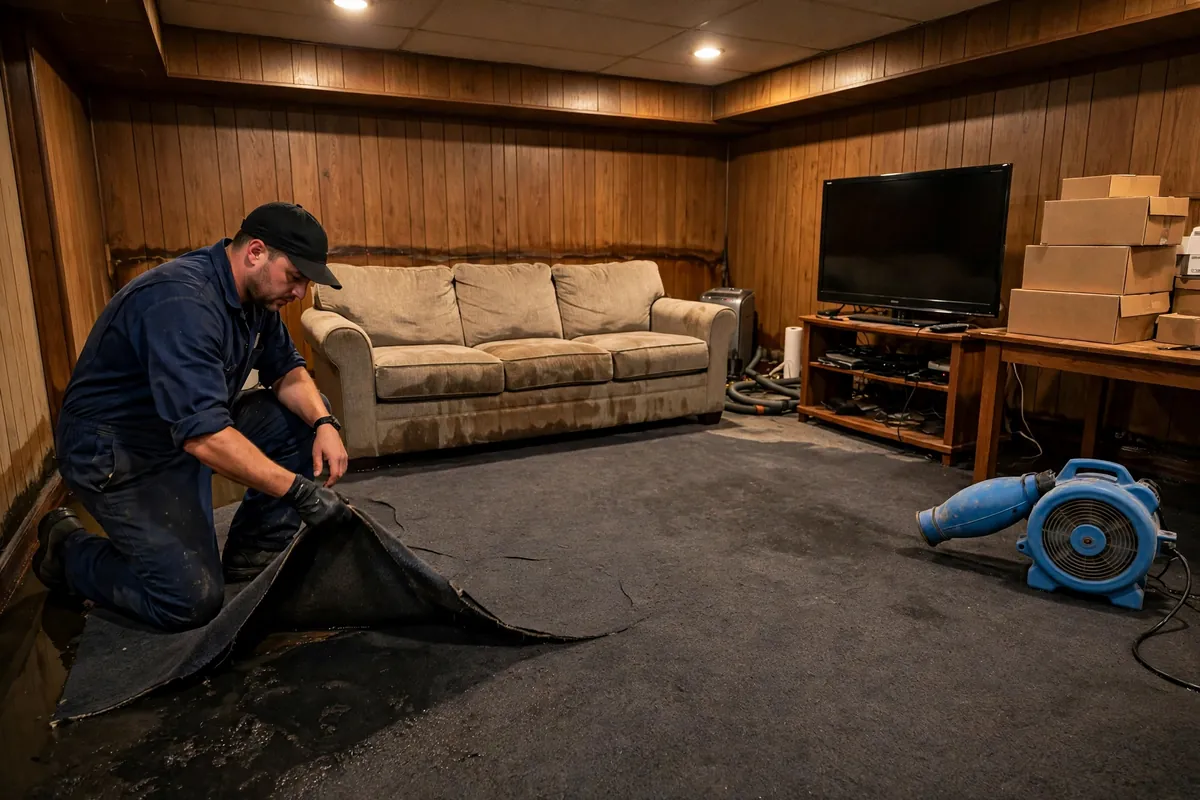
Furniture and Electronics in Finished Basements
Family rooms and home theaters hold sofas, TVs, gaming systems and speakers. Upholstered furniture soaked by storm or sewage water usually cannot be saved. Wood furniture can often be cleaned and dried. Electronics should not be plugged in until checked by a technician. We photograph and list each item for your claim.
Finished Basement Water Damage Timeline
Day one: extraction, removal of pad, baseboards, wet drywall and insulation, cleaning and treatment, drying set up. Days two to five: daily readings and adjustments. After drying: rebuild of walls, flooring and trim. Most families can use part of the basement again within a week, with full rebuild taking longer depending on the scope.
Bathroom in a Finished Basement
Basement bathrooms add tile, vanities and plumbing. Tile floors can often be dried, but water under shower pans and behind tub surrounds needs checking. Vanity cabinets with swollen bases may need replacement. Toilets near a floor drain backup must be disinfected or replaced.
Finished Basement Water Damage and Insurance
Coverage depends on the cause. A burst pipe or water heater failure is usually covered. A floor drain backup or sump pump overflow usually needs a water backup endorsement, often with a dollar limit. Seepage is often excluded as gradual. Because finished basements cost more to restore, knowing your limits before a loss is important. See water damage insurance claim help.
Ceiling Drywall in Finished Basements
Water from a burst pipe or appliance leak on the first floor often comes through the basement ceiling. Wet ceiling drywall can sag and fall, and insulation above may be soaked. The ceiling is checked and dried along with the walls and floor.
Keep a Finished Basement Dry Long-Term
Run a dehumidifier in summer, keep gutters and downspouts working, test the sump pump twice a year and avoid storing cardboard on the floor. These habits help protect the time and money you put into finishing the space.
Finished Basement FAQs
Do I have to tear out drywall in a flooded finished basement?
With storm water or sewage, yes. With clean water caught fast, drywall can sometimes be dried in place.
How high is a flood cut?
Usually at least 12 inches above the highest wet point, often 2 or 4 feet to match drywall sheet sizes.
Can my basement carpet be saved?
With clean water and fast drying, sometimes. The pad is almost always replaced. See carpet water damage.
Call for Finished Basement Water Damage Help
Call (440) 291-9431 for finished basement water damage restoration in Elyria, OH.