WATER MITIGATION • ELYRIA, OHIO
Emergency Water Mitigation in Elyria, OH
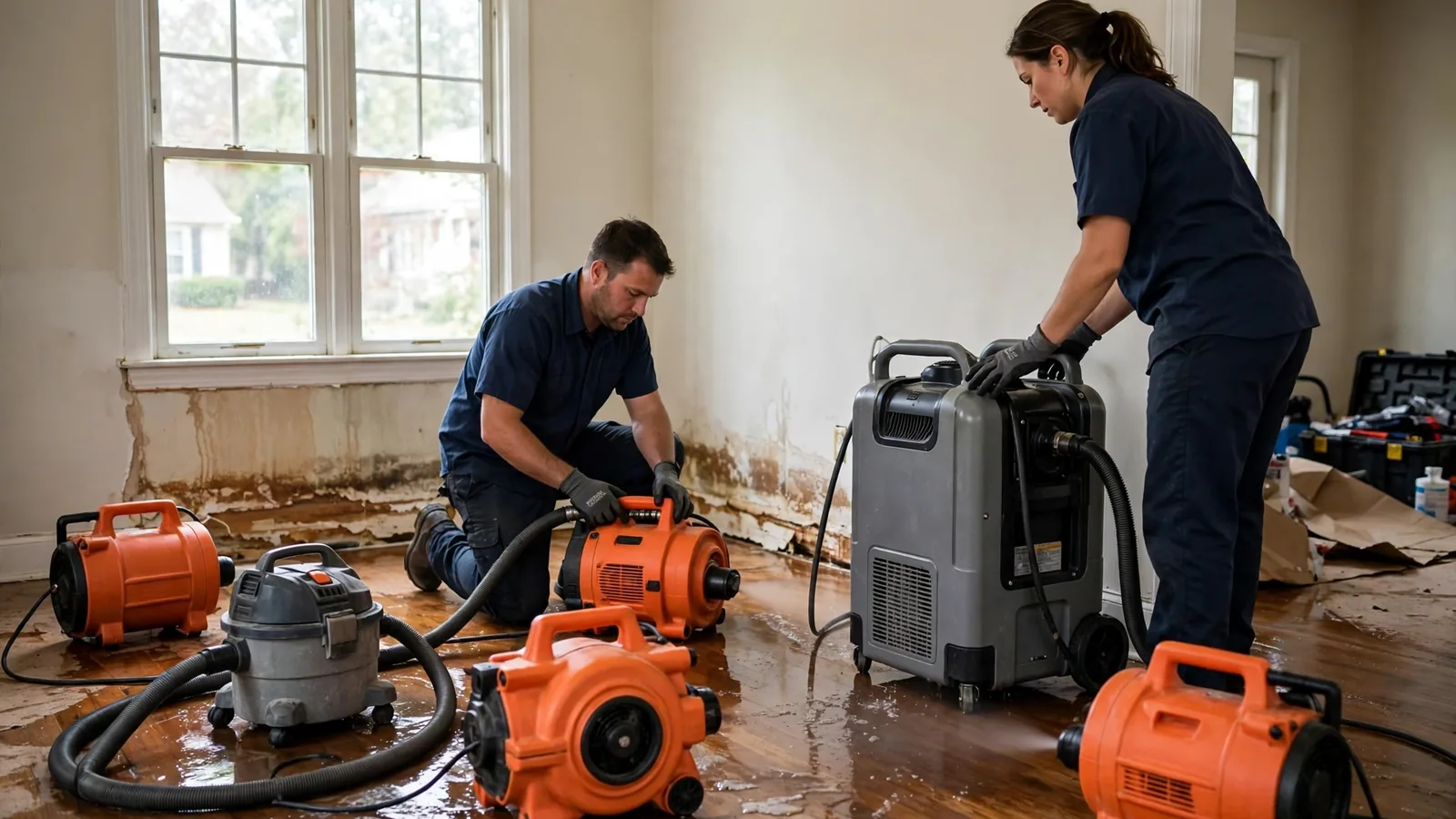
Water mitigation is the fast work that stops water damage from getting worse. Our water mitigation crew in Elyria, OH removes standing water, takes out materials that cannot be saved, treats surfaces and sets up drying, all on the first visit. A crew is dispatched immediately, 24/7, so your home and your insurance claim stay protected.
What Does Water Mitigation Cover for Elyria Homes?
Water mitigation covers water removal, removal of soaked materials, cleaning, antimicrobial treatment and drying. Its job is to stop the spread of damage before repairs begin.
Think of mitigation as emergency care for your house. It does not put new drywall or flooring back in. It keeps water from reaching more rooms, more framing and more of your belongings, and it keeps mold from starting. In a city like Elyria, where so much water damage begins in basements and inside walls, good mitigation in the first day often decides whether a repair is small or large.
Water Mitigation vs Restoration: The Difference in Plain Words
Mitigation and restoration are two parts of the same job:
- Water mitigation: stopping the damage. Extraction, tear-out of wet materials, cleaning and drying.
- Restoration: putting things back. Drywall, paint, trim, flooring and anything else that was removed.
Insurance companies often treat these as separate parts of the claim, and many adjusters want mitigation started right away. You do not need to wait for an adjuster to visit before calling for water mitigation services in Elyria, Ohio. Our water damage mitigation work in Elyria, OH is documented step by step so the adjuster can see what was done and why.
Your Policy and the Duty to Prevent Further Damage
Most homeowners insurance policies say you must take reasonable steps to protect your property from more damage after a loss. In plain terms, if a pipe bursts, the insurer expects you to stop the water and start drying quickly. Damage that grows because nothing was done may not be paid for. Calling for emergency water mitigation early protects both your home and your claim. For more on claims, see water damage insurance claim help.
Our Water Mitigation Process, Step by Step
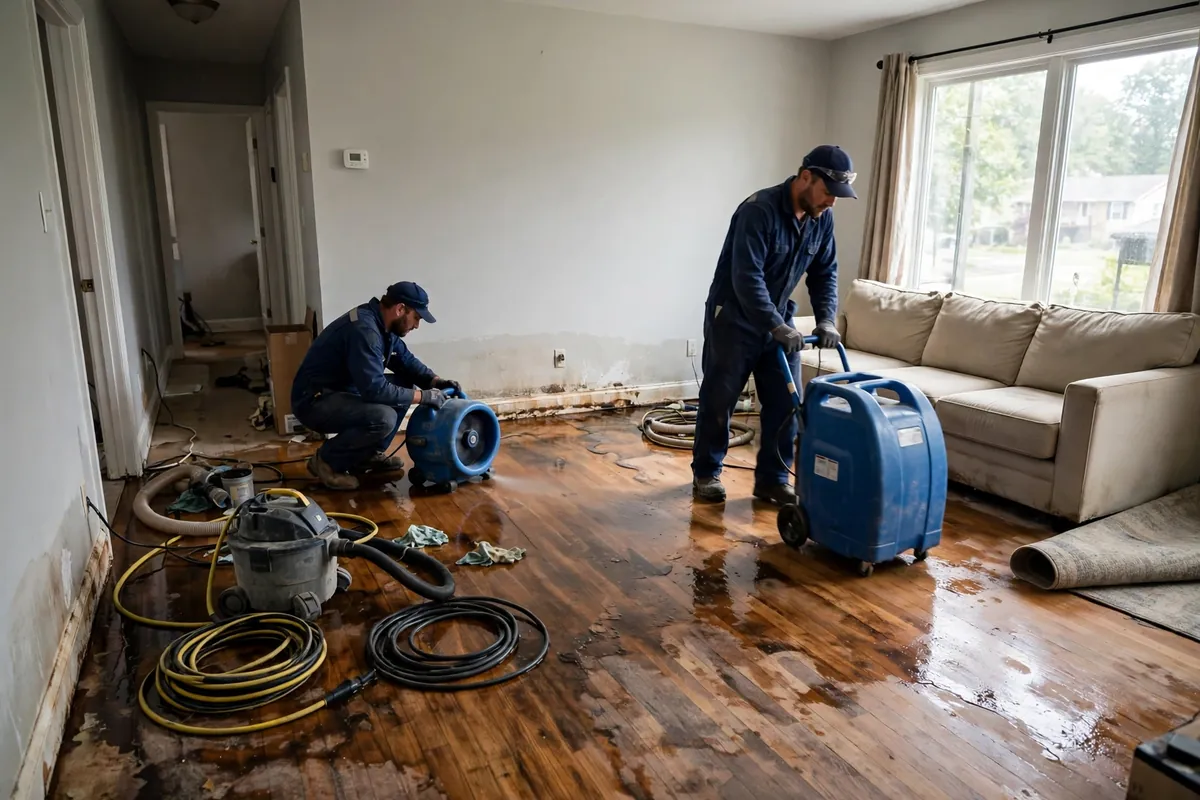
Step 1. Inspection and safety. We check for electrical hazards, sagging ceilings and gas smells, then confirm where the water came from.
Step 2. Source control. The leak is stopped or isolated. If a repair is needed, we let you know right away.
Step 3. Water extraction. Pumps and extraction tools remove standing water from floors and carpet.
Step 4. Moisture mapping. Meters and thermal imaging show how far water traveled behind walls and under floors.
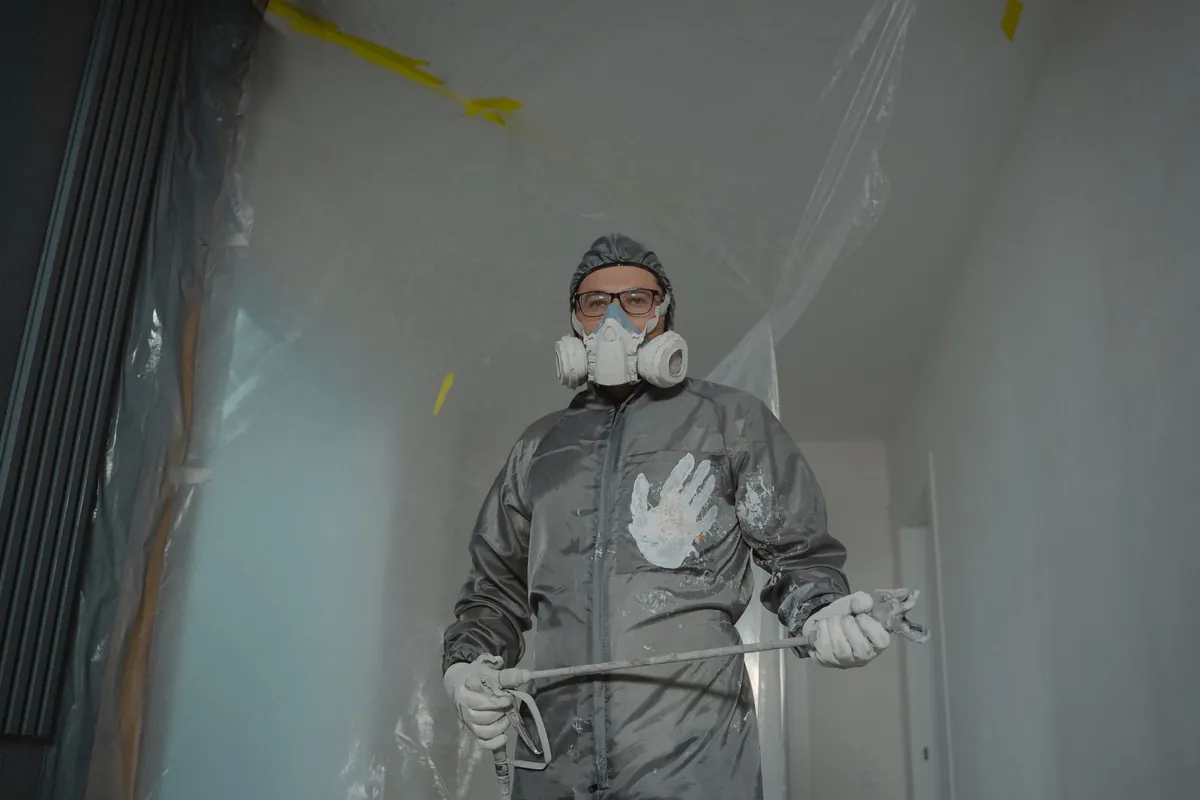
Step 5. Controlled tear-out. Only materials that cannot be dried, or are contaminated, are removed: carpet pad, swollen baseboards, wet insulation and drywall below the water line.
Step 6. Cleaning and antimicrobial treatment. Surfaces are cleaned and treated to slow mold and bacteria growth.
Step 7. Drying set-up. Dehumidifiers and air movers are placed following the IICRC S500 approach.
Step 8. Daily monitoring. Readings are recorded until the structure is dry, then the job moves to repairs.
What Gets Removed and What Gets Dried?
One of the biggest decisions in water mitigation is what to save. Here is how it usually goes in Elyria homes:
- Drywall: dried in place when caught fast with clean water. Cut out when soaked too long, swollen or exposed to sewage.
- Plaster walls: common in older Elyria homes. Plaster holds water longer but can often be dried with patience and the right setup.
- Carpet pad: almost always replaced after soaking.
- Carpet: often saved with clean water, removed with gray water that sat or with sewage.
- Insulation: wet fiberglass and cellulose are removed. Closed-cell foam can often stay.
- Hardwood floors: frequently saved with drying mats when the response is fast.
The goal is always to save as much as is safe to save, because drying is almost always less costly than replacing.
Water Mitigation Cost in Elyria, OH
Typical ranges for water damage mitigation in Elyria homes:
- Small mitigation job (one room, clean water): about $800 to $2,000
- Basement mitigation with tear-out and drying: about $2,000 to $6,000
- Large or contaminated losses: about $5,000 to $12,000
Final pricing depends on square footage, water category and how much material must be removed. See our full cost guide.
When Do You Need Water Mitigation?
Call for water mitigation as soon as you see any of these:
- Standing water on any floor
- Wet carpet that will not dry with fans
- Water stains spreading on a ceiling
- Baseboards or drywall that feel soft or are swelling
- A musty smell after a leak
- Water that came from outside, a floor drain or a toilet
Even a small leak inside a wall can affect framing and insulation, so it is worth a moisture check. If you are not sure whether to call a plumber or a restoration crew first, read restoration company or plumber.
Why Water Damage Mitigation Matters More in Elyria Homes
Older Elyria homes often have plaster walls, oak floors, full basements and older sewer laterals. Those features change how water behaves. Plaster holds water longer than drywall, oak flooring cups when moisture gets underneath, and basements trap humid air. Water damage mitigation in Elyria, OH is built around those details: we remove only what is necessary, use drying methods suited to dense materials and keep basements dehumidified so moisture does not settle back into walls.
Mitigation for Different Water Sources
- Burst pipe in a wall: open small holes or flood cuts to dry the cavity, remove wet insulation, protect ceilings below.
- Basement storm water: treat as contaminated, remove porous materials, disinfect and dry.
- Ice dam leak: dry the attic, ceilings and exterior walls, remove wet insulation.
- Appliance overflow: dry under cabinets and flooring, check the subfloor and ceiling below.
- Sewage: full Category 3 protocol with protective gear and disinfection.
Every source gets its own plan, which is why the first inspection matters so much.
What Happens in the First 72 Hours
Day one: extraction, moisture mapping, removal of unsalvageable materials, antimicrobial treatment and drying equipment set up.
Day two: moisture readings, equipment adjustments and any additional removal found during checks.
Day three: readings continue; many rooms reach their drying goal between days three and five.
After drying: equipment is removed, final readings are recorded and the space is ready for repairs.
This timeline is what keeps mold from starting and keeps your claim records clean.
Emergency Water Mitigation for Rentals and Businesses
Landlords, property managers and business owners need mitigation that limits downtime. We stage work around tenants and operating hours, keep owners updated daily and provide records that show exactly what was done. See rental property water damage and commercial water damage restoration.
Emergency Water Mitigation Checklist for Elyria Homeowners
- Shut off the water source and power to wet areas if safe
- Photograph the damage before anything is moved
- Call for mitigation the same day, even at night
- Report the loss to your insurer and keep the claim number
- Keep receipts for any emergency purchases
- Leave drying equipment running and doors closed as the crew asks
Following these steps protects your home, your health and your claim from the first hour.
Water Mitigation FAQs
What is water mitigation and do I need it?
Water mitigation is the set of steps that stop water damage from spreading. If water has soaked floors, walls or ceilings, you need it, because drying stops further damage and mold.
Does insurance pay for water mitigation?
In many sudden water damage claims, mitigation is part of the covered loss. Coverage depends on your policy and the cause of the water, so check with your insurer.
Which comes first, mitigation or restoration?
Mitigation always comes first. Repairs cannot start until the structure is dry, or new materials can trap moisture and grow mold.
How long does water mitigation take?
Extraction and set-up usually happen on the first visit. Drying typically takes three to five days, with daily moisture checks.
Can I do water mitigation myself?
You can remove standing water from small spills, but water hidden in walls and subfloors needs meters and commercial drying equipment to find and remove.
Call for Emergency Water Mitigation in Elyria
The faster the damage is controlled, the smaller the repair. Call (440) 291-9431 for water mitigation in Elyria, OH and a crew will be dispatched immediately, any hour.