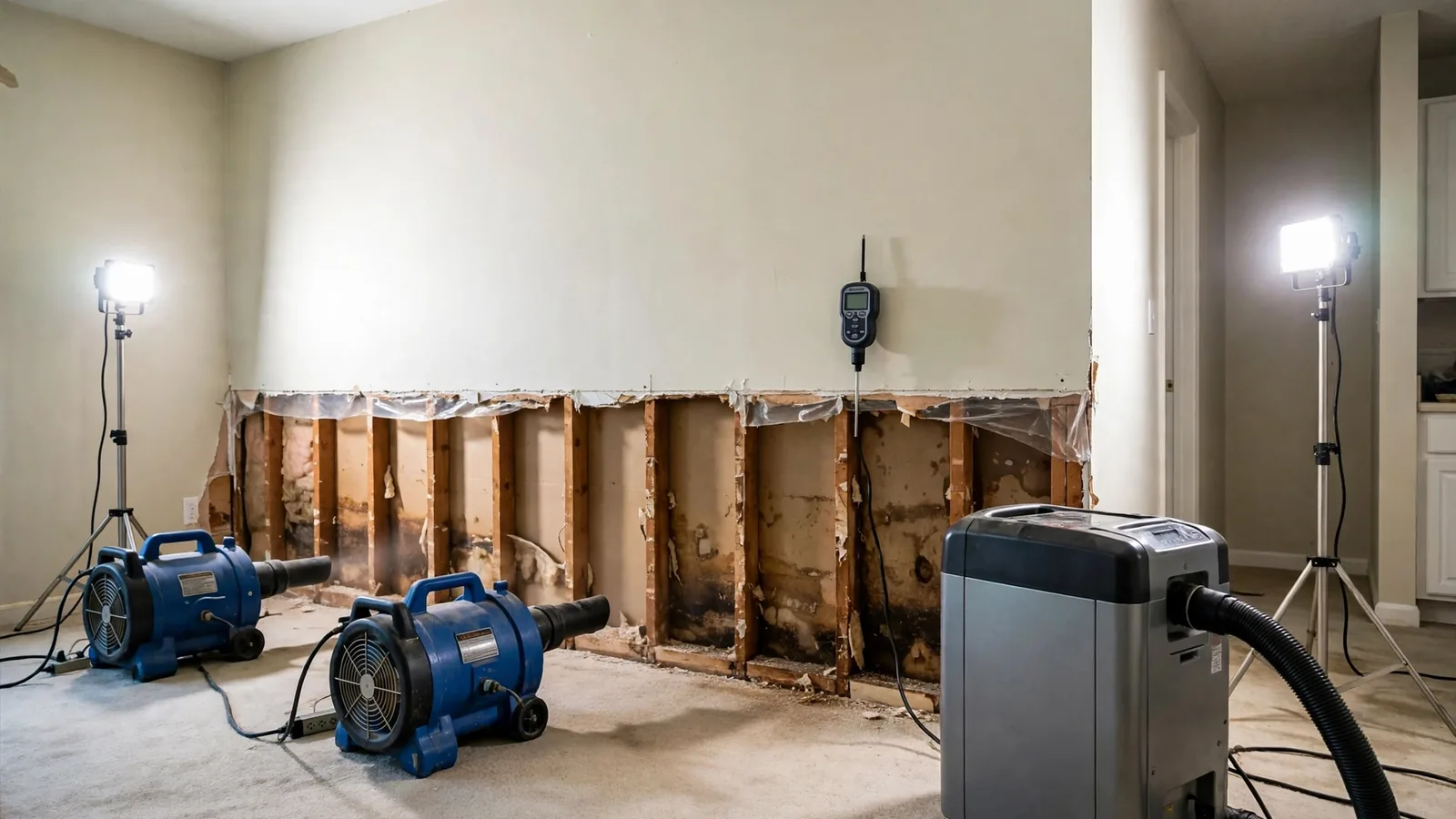
STRUCTURAL DRYING • ELYRIA, OHIO
Structural Drying & Dehumidification in Elyria, OH
The water you can see is gone, but walls, subfloor and framing are still holding it. Our structural drying crew in Elyria, OH uses commercial dehumidifiers, air movers and daily moisture readings to bring every material back to normal dryness, so you do not end up with mold, warped floors or peeling paint weeks later.
How Long Does Structural Drying Take in an Elyria Home?
Most homes take three to five days to dry after water extraction. Plaster walls, hardwood, concrete and multi-layer floors can take longer.
Drying time depends on how much water got in, how long it sat, what materials it reached and the weather. Older Elyria homes often have plaster and lath walls and thick oak floors, which hold water longer than drywall. Cold winter air outside and humid summer air both change how the drying system is set up.
Water Damage Classes 1 to 4
The IICRC S500 standard groups water damage by how hard it is to dry:
- Class 1: small area, little water absorbed. Fastest to dry.
- Class 2: a whole room, water wicked up walls less than about 24 inches.
- Class 3: water came from above, soaking ceilings, walls, insulation and floors.
- Class 4: dense materials like hardwood, plaster, concrete and brick that need special drying methods and more time.
The class tells us how many dehumidifiers and air movers to place and how long the job should take.
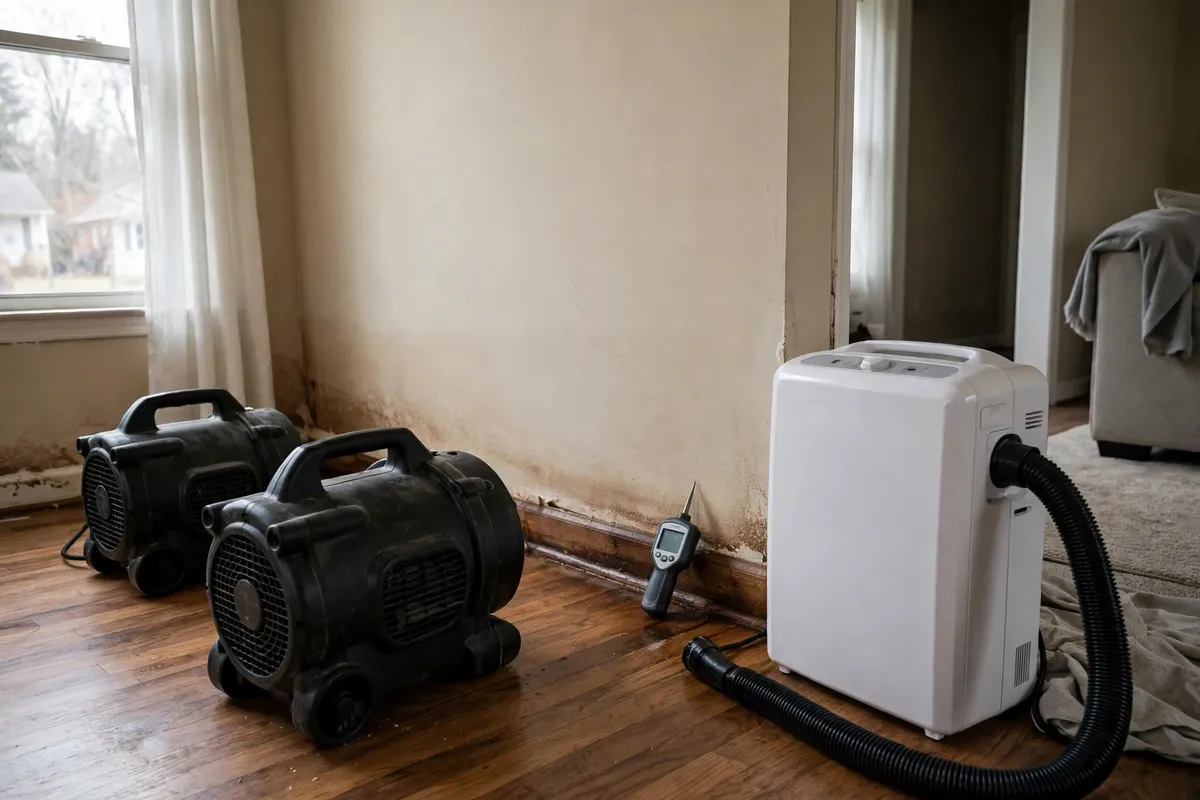
The Equipment That Does the Work
- Low-grain refrigerant (LGR) dehumidifiers: pull large amounts of water from the air
- Desiccant dehumidifiers: used in cold conditions and for dense materials
- High-velocity air movers: push dry air across wet surfaces to speed evaporation
- Wall cavity drying systems: force dry air into walls through small holes
- Floor drying mats: pull moisture out of hardwood floors
- Moisture meters and thermal imaging: track progress and confirm dryness
Renting a home dehumidifier and box fan rarely does the same job. Water damage drying in Elyria, OH is a balance of air movement, dehumidification and temperature, measured every day.
Daily Moisture Readings and Drying Logs
Every day of drying, the crew checks moisture readings at mapped points and compares them with dry materials elsewhere in the house. Equipment is moved or added as needed. Once every area reaches its drying goal, the equipment comes out. These logs are also what your insurer needs to see that the job was done correctly.
Why Drying Is Different in Ohio Winters
Cold outside air is dry, but it makes the inside of walls colder, which slows evaporation. In winter we often keep the work area warm and closed, and use dehumidifiers built for cooler temperatures. In humid summers, open windows can slow drying, so the space is usually closed up and dehumidified. Knowing which setup to use is part of professional dehumidification services in Elyria, Ohio.
Structural Drying Cost
- One room, Class 1 or 2: about $500 to $1,500
- Basement or multi-room drying: about $1,500 to $4,000
- Class 3 or 4 drying with specialty equipment: about $3,000 to $7,000
Equipment rental per day, labor and monitoring make up most of the cost.
Drying Plaster Walls in Older Elyria Homes
Plaster and lath walls are common in Elyria homes built in the early and mid-1900s. Plaster is dense and holds water much longer than drywall. It can often be dried in place instead of torn out, which saves money and keeps original walls. Drying plaster takes more time, steady dehumidification and sometimes small holes drilled into the wall cavity to move dry air behind it. We monitor the plaster surface and the cavity until both reach their drying goal.
Drying Concrete and Block Basement Walls
Concrete floors and block walls absorb water and release it slowly. If a basement is not dried properly, moisture keeps coming out of the concrete for weeks, raising humidity and feeding mold on anything nearby. Dehumidifiers built for basements, plus air movers aimed at walls and floor, bring concrete back to normal. We check concrete readings separately from wood and drywall.
Wall Cavity and Ceiling Drying
When water runs inside walls or soaks a ceiling, opening everything is not always needed. Injection drying systems push dry air into wall cavities through small holes near the baseboard. For ceilings, removing wet insulation from above and directing airflow into the cavity often saves the drywall. This approach keeps tear-out to a minimum.
Drying vs Tear-Out: How We Decide
- Can the material be dried to its normal moisture level in a reasonable time?
- Was the water clean, gray or contaminated?
- Has the material swelled, delaminated or lost strength?
- Is mold already present?
If the answer points to drying, we dry. If not, we remove and replace. Clear readings and photos back up each decision for your insurer.
Dehumidification Services in Elyria, Ohio After Water Damage
After a flood or leak, indoor humidity can stay high for days. Commercial dehumidifiers remove gallons of water from the air each day. In basements, we may leave a dehumidifier running after drying to keep humidity under control while repairs are scheduled. For prevention, see how fast mold grows after a basement flood.
Drying Out Walls After Water Damage: Common Mistakes
- Turning off equipment at night to save noise: it lets moisture rebuild in walls.
- Opening windows on humid days: it adds moisture instead of removing it.
- Running household fans only: they move air but do not remove water from it.
- Painting or patching before readings are normal: it traps moisture and invites mold.
- Closing walls with wet insulation inside: it guarantees odor and mold later.
Avoiding these mistakes is half of what professional drying is about.
Air Movers and Dehumidifiers: How Many Are Needed?
Equipment is sized to the room, not guessed. Air movers are placed based on wall length and affected area, angled to sweep wet surfaces. Dehumidifiers are sized based on room volume and water class. Too little equipment means slow drying and mold risk. Too much wastes energy. Daily readings let the crew add or remove units as the job progresses.
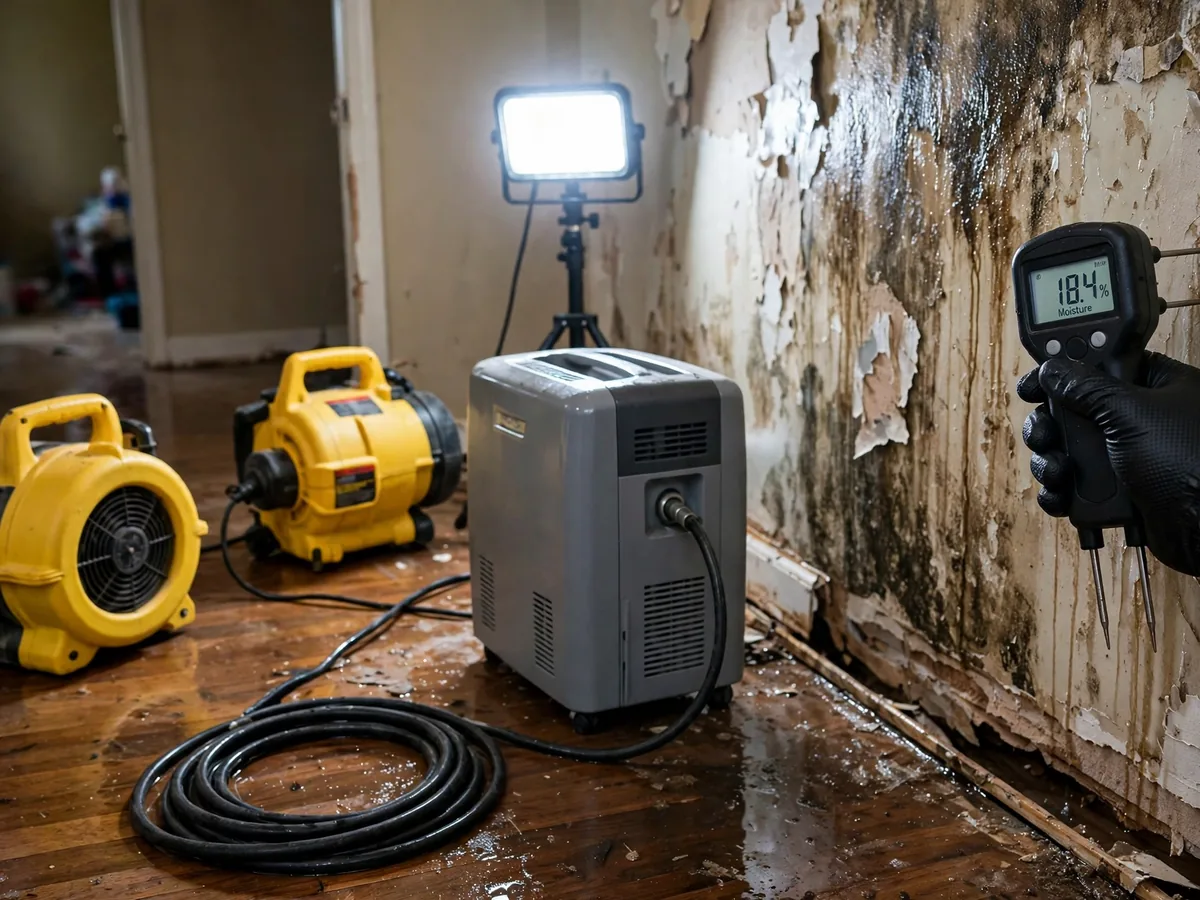
Structural Drying for Finished Basements and Upper Floors
In finished basements, drying focuses on concrete, studs and bottom plates once wet drywall is removed. On upper floors, water from a burst pipe or overflow often soaks the floor system between levels, so drying is done from both above and below. Each area gets its own drying goal.
What You Can Expect During Drying
Equipment runs day and night and makes steady noise. Rooms may feel warm. Doors to the drying area should stay closed unless the crew says otherwise. The crew visits daily to take readings and adjust equipment. Once all areas reach their goal, equipment is removed and the space is ready for repairs.
Drying Hardwood, Cabinets and Stairs
Some materials need special drying methods. Hardwood floors are dried with mat systems that pull moisture up through the boards. Cabinets are dried by removing toe kicks and blowing dry air underneath. Basement stairs are often open underneath, so air movers can dry them from below. Each material has its own drying goal based on dry reference readings in the same house.
Structural Drying Records for Insurance
Every drying job ends with a set of records: moisture maps, daily readings, equipment logs and photos. These show the insurer that the structure reached normal dryness before repairs. They also help if you sell the home later and need to show the water damage was handled properly.
Structural Drying FAQs
How long does it take to dry out a house after water damage?
Usually three to five days. Dense materials and large losses can take a week or more.
Can drywall be dried or must it be replaced?
Drywall soaked with clean water and caught fast can often be dried in place. Drywall that sat wet, swelled, crumbled or touched sewage is replaced.
Why do the fans have to run day and night?
Drying works by keeping a steady flow of dry air on wet surfaces. Turning equipment off lets moisture build back up and stretches the job out.
How do you know when it is really dry?
Moisture meters compare wet areas with dry reference points in the same home. When they match the drying goal, the area is dry.
Call for Structural Drying in Elyria
Do not let hidden moisture turn into mold. Call (440) 291-9431 for structural drying in Elyria, OH. For the full list of services, see water damage restoration in Elyria (/).