WATER DAMAGE GUIDE • ELYRIA, OHIO
Sump Pump Battery Backup Guide for Northeast Ohio
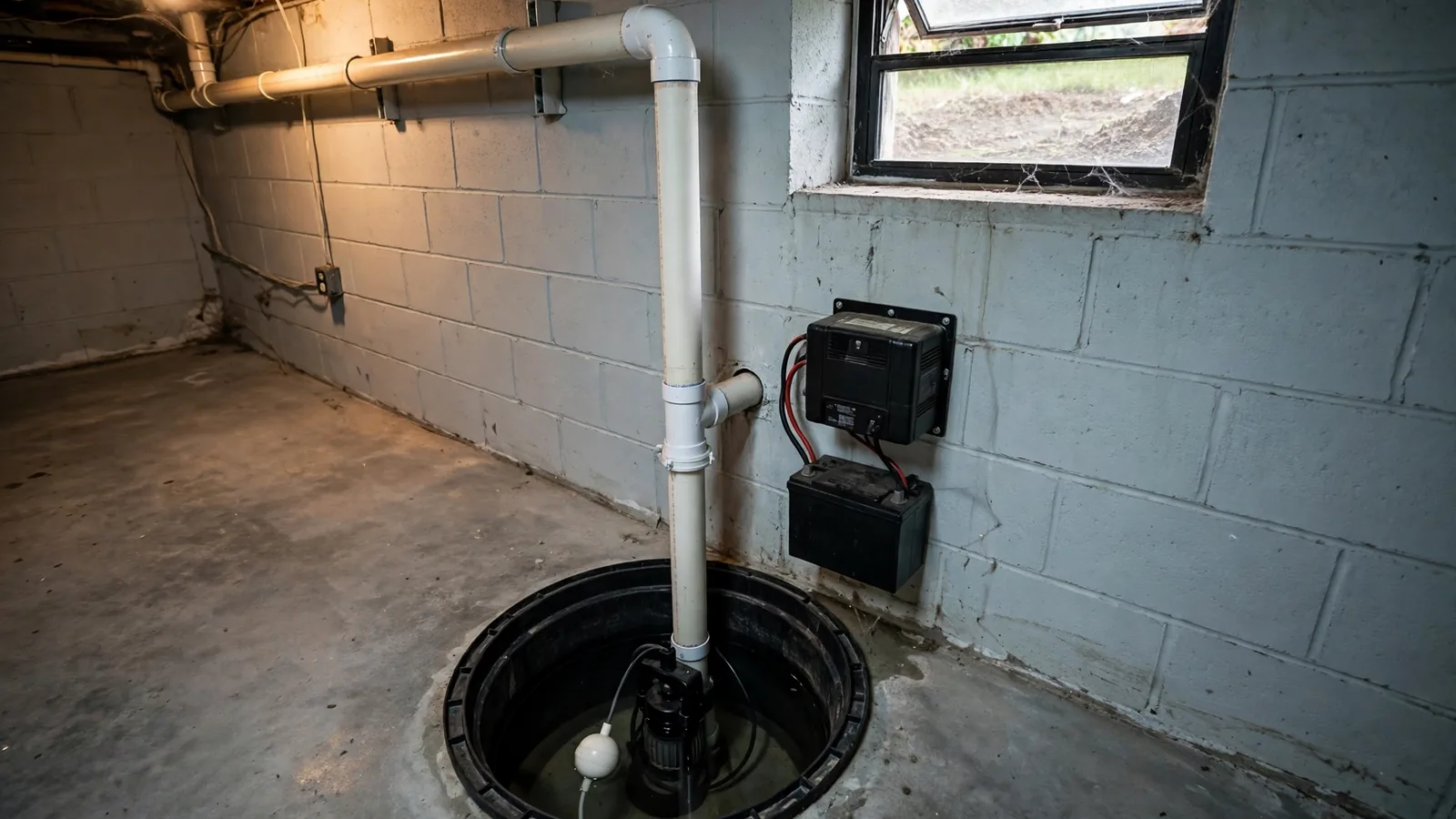
The storms that fill your sump pit are the same storms that knock out power. A sump pump battery backup keeps water moving when the main pump cannot. Here is how the options compare for Elyria homes.
Do Elyria Homes Really Need a Backup Sump Pump?
If your sump pump runs often during rain or snowmelt, a backup is one of the best low-cost protections against a flooded basement, especially during power outages.
Sump pumps also fail from stuck floats, burned-out motors and clogs. A backup pump covers both outages and mechanical failures.
Backup Types Compared
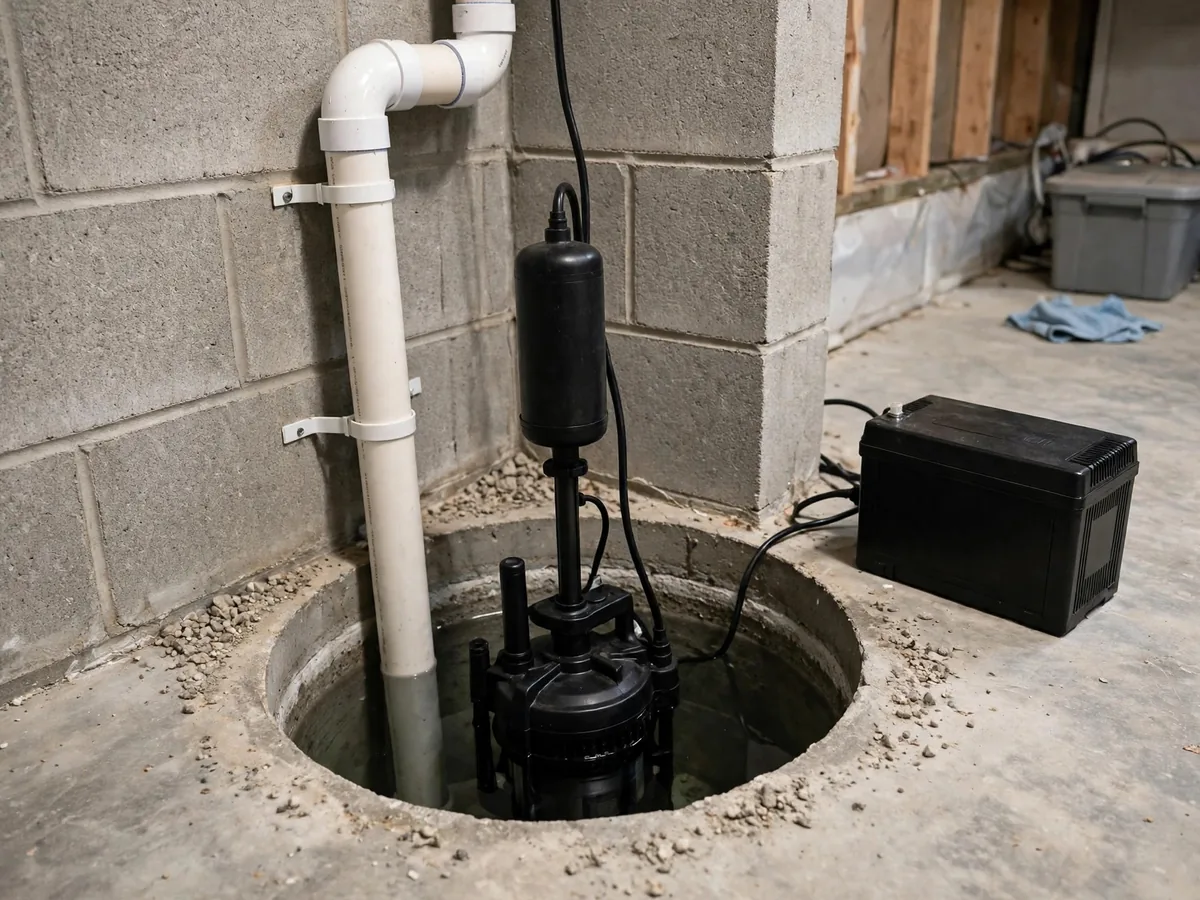
- Battery backup pump: second pump powered by a deep-cycle battery. Works during outages. Battery life typically a few hours to a day of pumping depending on battery size and inflow. Battery needs replacing every few years.
- Water-powered backup: uses city water pressure to pull water from the pit. No battery to replace, but needs good water pressure and uses water while running. Check local code.
- Combination unit: primary and battery backup in one system with a controller.
- Generator: powers the primary pump and other needs during outages.
Alarms and Testing
- Add a high-water alarm to warn you before water reaches the floor
- Test both pumps each spring and fall by filling the pit with a bucket of water
- Check the battery and charger monthly
- Keep the discharge line clear and away from the foundation
- Watch for discharge lines freezing in winter
When the Pump Fails Anyway
If water is already on the floor, see sump pump failure cleanup and flooded basement cleanup.
Sump Pump Backup Ohio Homeowners Choose: How To Pick
- Frequent outages in your area: battery backup or generator.
- Strong city water pressure and no desire to replace batteries: water-powered backup, if allowed by local code.
- Very high water table: a second primary pump plus a battery backup.
- Finished basement: invest in the most reliable setup you can, because the cost of a failure is higher.
A plumber or waterproofing contractor can size the pump to your pit and inflow.
How Often Should a Sump Pump Run?
In wet seasons, many Elyria sump pumps run every few minutes. In dry weather they may not run for weeks. If your pump runs constantly even in dry weather, it may be undersized, the float may be set wrong, or the check valve may be letting water fall back into the pit. Have it checked before storm season.
Water Powered Sump Pump: Pros and Cons
Pros: no battery to replace, runs as long as city water pressure is available, low maintenance.
Cons: uses city water while running, needs good water pressure, may require a backflow preventer and must meet local plumbing code. Check with Elyria Public Utilities or a plumber before installing.
Sump Pump Alarm Options
Simple alarms sound when water rises. Wi-Fi alarms send a phone alert, which is useful when you are at work or traveling. Some battery backups include built-in alarms that warn of power loss, low battery and high water. For a few dollars a month in prevention, an alarm can save thousands in cleanup.
Discharge Line Care
The pump is only as good as its discharge line. Keep the outdoor end clear of leaves, snow and ice. Make sure water flows away from the house, at least 10 feet if possible. In winter, a freeze-protection fitting can let water escape if the line freezes. A frozen line is a common cause of winter basement floods.
Maintenance Checklist
- Test both pumps twice a year
- Clean the pit and intake screen
- Check the check valve
- Replace backup batteries every 3 to 5 years
- Replace the primary pump around 7 to 10 years
Sump Pump Battery Backup Installation Tips
- Use a deep-cycle marine or AGM battery sized for your pump
- Keep the battery in a vented box off the floor
- Place the backup pump slightly higher in the pit than the primary
- Use a separate discharge line or a proper connection with check valves
- Plug the charger into a dedicated outlet
A plumber or waterproofing contractor can install the system so both pumps work correctly.
What a Backup Cannot Do
A backup pump protects against power loss and primary pump failure. It does not stop water from floor drain backups, wall seepage or plumbing leaks. Homes with those risks need other protection, like a backwater valve or interior drainage. See basement floor drain backup.
Signs Your Backup Needs Attention
- Charger shows a fault light
- Battery is more than four years old
- Alarm beeps or shows low battery
- Backup pump does not run during testing
Fix these issues before storm season, not during it.
Cost of Backup vs Cost of a Flood
A quality battery backup system costs a small fraction of a basement cleanup. For homes with finished basements in Elyria, the backup often pays for itself the first time the power goes out during a storm.
Sump Pumps in Older Elyria Homes
Many older Elyria homes were built without sump pits. Some had pits added later during waterproofing. If your home has no pit and the basement takes water from groundwater, a waterproofing contractor can add one with drain tile. If your home has a pit, keep the pump and backup in good shape, because the system only works if both pumps are ready.
Generator Safety
If you use a portable generator to run your sump pump during an outage, keep it outside, far from windows and doors. Never run a generator in a basement, garage or porch. Carbon monoxide can build up quickly and is deadly.
FAQs
How long does a battery backup last?
It depends on battery size and how often the pump runs. Some run a few hours; larger setups can run a day or more.
Does insurance cover sump pump failure?
Often only with a water backup endorsement. See sewer backup coverage in Ohio.